We often think learning means collecting knowledge.
We collect degrees.
We collect certificates.
We read books.
We attend courses.
We save articles.
We watch videos.
And then we feel we have learned.
But have we?
There is a simple test.
What did your learning change?
If nothing changed in what you do, how you think, how you solve problems, or how you help others, then perhaps you have collected information—but you have not yet turned it into knowledge that matters.
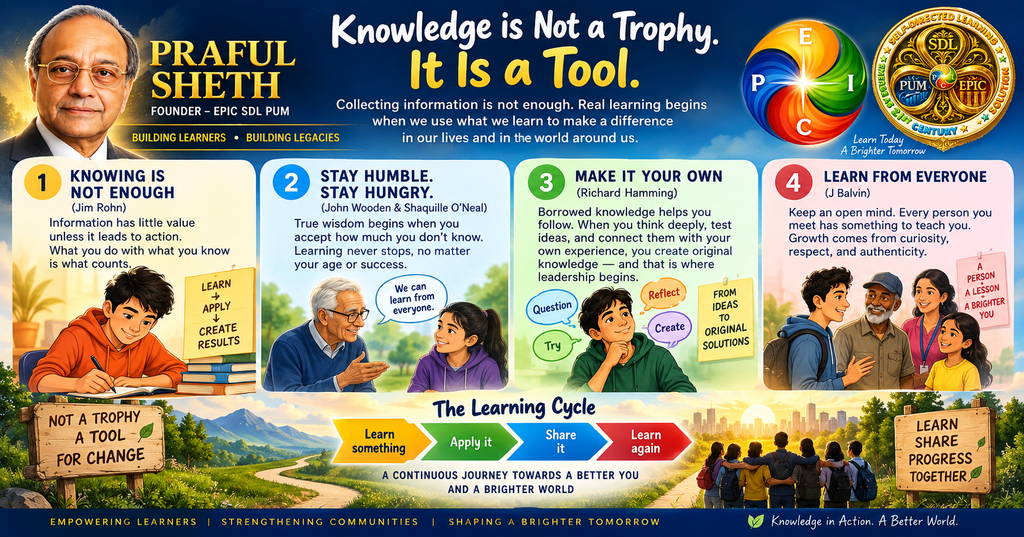
Knowledge is not a trophy to be displayed.
It is a tool to be used.
1. Knowing Is Not Enough
Jim Rohn made a powerful point: information has little value if it does not lead to action.
You may know that exercise is good for you. But knowing is not exercising.
You may know how to communicate well. But knowing is not communicating well.
You may know how to lead a team. But knowing is not leading.
The real value of learning begins when it changes something.
A small idea, put into action, can be worth more than a library of ideas left untouched.
So after learning something new, ask:
“What will I do differently because I now know this?”
That question turns learning into action.
2. Stay Humble. Stay Hungry.
John Wooden and Shaquille O’Neal remind us of another truth:
You never finish learning.
A young person can teach an old person something.
A junior worker can teach a senior leader something.
A child can ask a question that makes an adult see the world differently.
The moment we think, “I already know enough,” learning begins to slow down.
Wisdom is not knowing everything.
Wisdom is knowing that there is always more to learn.
The best learners carry two things with them:
confidence in what they know and humility about what they do not know.
3. Don’t Just Borrow Knowledge. Make It Your Own.
Richard Hamming points to something deeper.
We can borrow ideas from books, teachers, experts, and other people. This is useful. It gives us a starting point.
But something changes when we think deeply about what we have learned.
We test it.
We question it.
We try it.
We make mistakes.
We connect it with our own experience.
Then the idea becomes ours.
This is where creativity begins.
A person who only repeats what others have said can become a good follower.
A person who understands, questions, and rebuilds ideas can become a creator.
And creators can become leaders.
4. Learn From Everyone
J Balvin offers another valuable lesson: keep your mind open.
We sometimes decide who can teach us.
“This person is not educated.”
“This person is too young.”
“This person is from a different field.”
“This person does not think like me.”
And so we miss the lesson.
Every person carries some experience we do not have.
A driver may teach you patience.
A child may teach you curiosity.
A farmer may teach you resilience.
A colleague may teach you a better way to solve a problem.
A stranger may give you an idea that changes your life.
An open mind turns everyday life into a classroom.
The Learning Cycle
Perhaps this is the real purpose of education.
Not to fill the mind.
But to activate the mind.
Learn something.
Apply it.
Learn from the experience.
Improve it.
Share what you have discovered.
Help someone else.
Then stay curious and learn again.
This creates a powerful cycle:
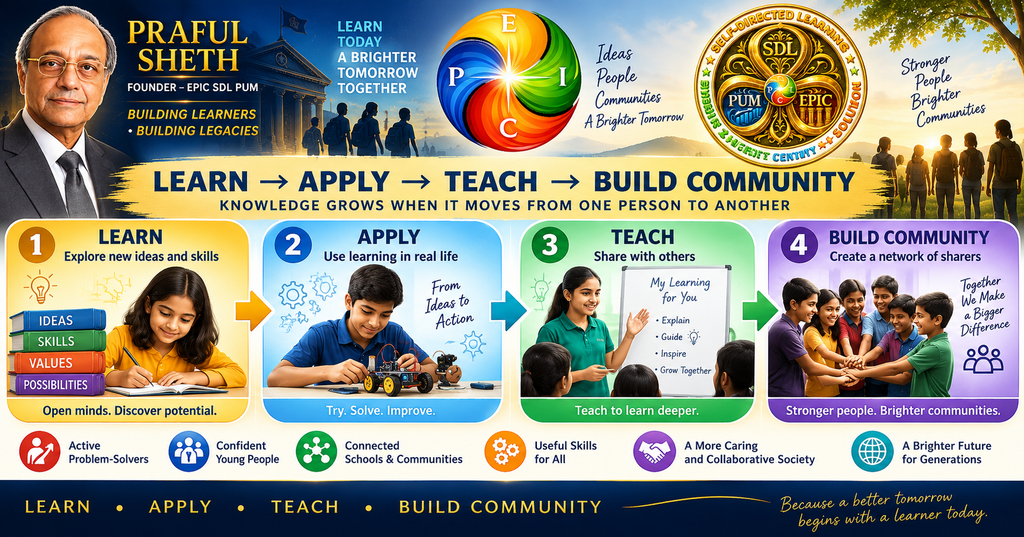
Learn → Apply → Share → Learn Again
And when this cycle spreads from one person to another, something bigger happens.
Learning becomes more than personal success.
It becomes a way to strengthen families, schools, workplaces, and communities.
So don’t ask only:
“What have I learned?”
Ask:
“What have I done with what I learned?”
And then ask one more question:
“Who can benefit if I share it?”
That is when knowledge stops being a trophy.
It becomes a tool for change.